
An estimated 85% of women globally have experienced or witnessed online violence, and the vast majority of AI-generated sexual deepfakes target women. This course unpacks what TFGBV is, how it manifests, and the role technology and platforms play. It combines foundational knowledge with regional case studies, legal analysis, and practical skills for prevention, response, and advocacy. Each module includes clear learning outcomes and prompts for independent study.
Home / Сourses / Course Detail
Technology Facilitated Gender Based Violence in the Global Majority
Current Status
Not Enrolled
Enroll in this course to get access
Price
Free
Get Started
Course Objectives
By the end of this course, learners will:
- Define TFGBV and distinguish it from related concepts (cybercrime, online harassment, hate speech).
- Identify forms and vectors of TFGBV, such as sextortion, doxxing, deepfakes, and explain intersectional risk factors.
- Map legal frameworks and gaps across Global South regions, including practical remedies and enforcement limits.
- Analyse technology and platform dynamics, including surveillance tools, wearable/ambient cameras, recommendation systems, and encrypted messaging.
- Propose policy and product interventions (safety-by-design, reporting channels, transparency, capacity-building).
Who can take this course?
- Policymakers and regulators.
- University students.
- Gender advocates and civil society representatives.
- Journalists and human rights defenders.
- Technologists, product managers, trust & safety professionals.
Course Format
Video| Notes | Quizzes
Other Details
- Earn a Certificate.
- Self-Paced Learning.
- 3 Hours of on-demand learning
Learning Content
- Understanding TFGBV.
- Legal Frameworks on TFGBV and Gaps.
- TFGBV and Platform Dynamics.
- Prevention, Mitigation, and Survivor Support.
- Solutions and Policy Approaches.

Course Facilitator
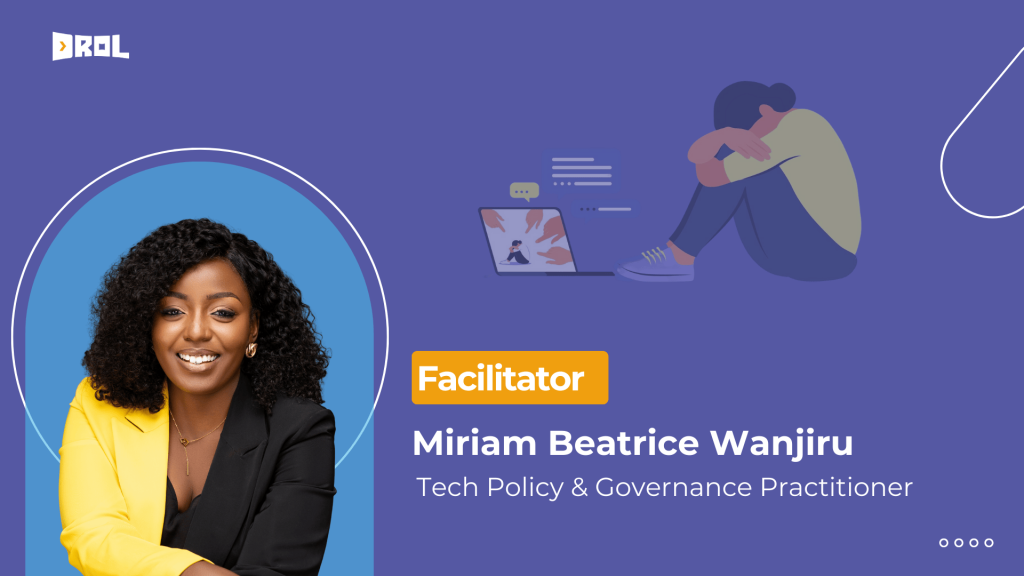
Miriam Beatrice Wanjiru
Tech Policy & Governance Practitioner
Facilitator's Bio
Miriam Beatrice Wanjiru is a Tech Policy & Governance Practitioner specialising in digital rights and inclusion. She serves as Programmes Officer, East Africa at Paradigm Initiative (PIN), where she leads regional projects that advance digital inclusion, online safety, and rights-based technology governance. Her work focuses on building capacity for policymakers, journalists, and human rights defenders on issues including artificial intelligence governance, technology-facilitated gender-based violence, freedom of expression, and data protection.
She holds a BA (Hons) in Public Policy from Kenyatta University, a certificate in Artificial Intelligence Law and Governance from the London School of Economics, and is a Master’s candidate in International Studies at the University of Nairobi. Her work and scholarship reflect a strong commitment to gender equity, digital justice, and inclusive technology ecosystems in the Global Majority.