
This course discusses the intersection between human rights and digital technologies, exploring how rights such as freedom of expression, privacy, and access to information are upheld or challenged in the digital era. Participants will gain insights into international and African legal instruments, case studies, advocacy strategies, and lessons from Paradigm Initiative’s work in the field.
Home / Сourses / Course Detail
Understanding Digital Rights and Their Legal Frameworks
Current Status
Not Enrolled
Enroll in this course to get access
Price
Free
Get Started
Course Objectives
By the end of this course, learners will:
- Comprehend the foundational concepts of digital rights and their significance.
- Analyse international and regional legal frameworks governing digital rights.
- Identify challenges and threats to digital rights in various contexts.
- Apply legal principles to real-world scenarios involving digital rights infringements.
- Develop advocacy strategies to promote and protect digital rights.
Who can take this course?
- Civil society organisation members.
- Legal professionals and human rights advocates.
- Journalists and media practitioners.
- Policy makers and regulators.
- Students and academics in law, political science, and related fields.
Course Format
Video| Notes | Quizzes
Other Details
- Earn a Certificate.
- Self-Paced Learning.
- 3 Hours of on-demand learning
Learning Content
- Introduction to Digital Rights.
- International Legal Frameworks.
- African Regional Legal Instruments.
- National Legal Frameworks in Africa.
- Key Issues in Digital Rights.
- Digital Rights Advocacy and Litigation.
- Emerging Trends and Future Directions.

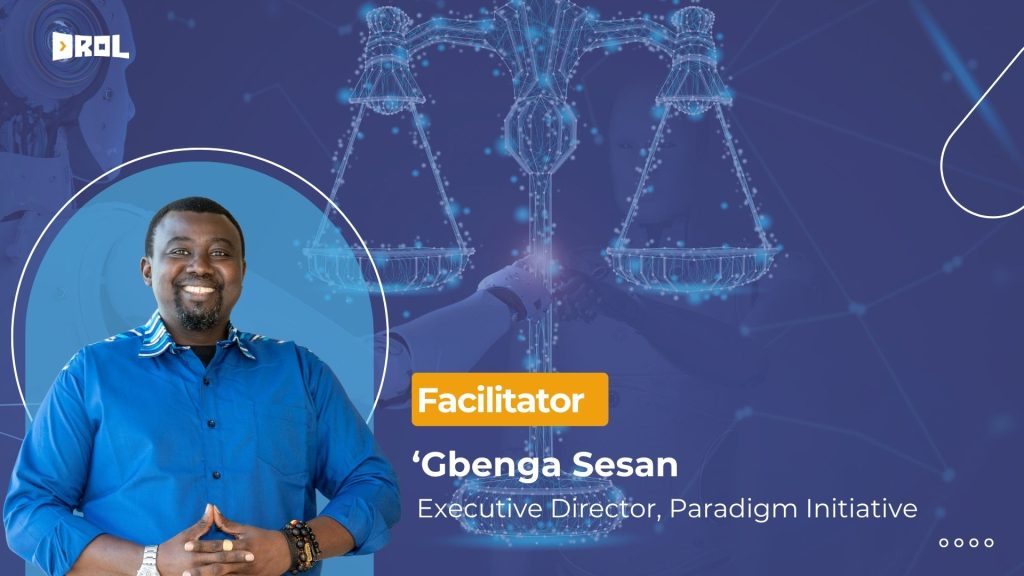
Course Facilitator
‘Gbenga Sesan
Information Technology and Cybersecurity Specialist
Facilitator's Bio
‘Gbenga Sesan is the Executive Director of Paradigm Initiative, a pan-African social enterprise working on digital inclusion and digital rights, with offices in Cameroon, Kenya, Nigeria, Senegal, Zambia and Zimbabwe. A 2008 Ashoka Fellow, he served on Nigeria’s Presidential Committees for Harmonization of the Information Technology, Telecommunications and Broadcasting Sectors (2006) and the Roadmap for the Achievement of Accelerated Universal Broadband Infrastructure and Services Provision (2013). He served as Vice Chair of the African Technical Advisory Committee for the United Nations Economic Commission for Africa, was appointed to the inaugural High-Level Leadership Panel of the Internet Governance Forum (IGF) by UN Secretary-General António Guterres in August 2022, is a member of the International Panel on the Information Environment’s Scientific Panel on Global Standards for AI Auditing, and serves as the Chair of the Standard Organisation of Nigeria’s National Technical Committee on Digitally Delivered Services.